

A packed Las Vegas itinerary can look efficient on paper and still waste hours crossing between the Strip, Downtown, and sights outside the city. A smarter visit starts with geography, not a longer checklist. This Las Vegas travel guide helps you choose what fits your trip before you spend time or money getting there.
It’s easy to underestimate the practical details: resort fees add to hotel bills, rideshare pickups can mean a walk through a resort, and the paid Monorail is different from the free trams connecting select Strip hotels. Group nearby stops, leave breathing room between activities, and compare the full cost before you book.
Use this guide to compare the Strip, Downtown, and nearby sights, then choose how to get between them. Whether you’re planning a short first visit or a longer stay, prioritize a few experiences that suit your schedule, group, and budget. Check routes before setting a tight timetable, keep a buffer for unexpected costs, and spend less time backtracking.
Key Takeaways
- Use this Las Vegas travel guide to match your plans to the areas, activities, and logistics that matter most to your visit.
- Compare the Strip, Downtown, and nearby sights by atmosphere and interests, from the Bellagio Fountains to Fremont Street and the Sphere.
- Check your dates against major events, the forecast, hotel terms, and reservation needs before committing to plans.
- Choose a trip theme, group nearby stops, and leave room to adjust rather than packing every day with attractions.
Las Vegas Travel Guide Basics: What to Expect Before You Go
A useful Las Vegas travel guide connects places, activities, timing, and logistics so you can make decisions before committing vacation days or budget. Las Vegas isn’t one compact resort district: it includes the Strip, Downtown, local neighborhoods, and desert landscapes beyond the city. Decide what you want from the visit first, then plan where and how to do it.
You can build a trip around shows, dining, attractions, outdoor activities, or gaming. Casinos don’t have to be the main event. VegasWizzard’s Las Vegas Travel Guide brings together recommendations and itineraries, and you can book experiences such as helicopter flights, day trips, excursions, and show tickets. Schedules, access, and booking terms can change, so check the details for each activity before you go. For broader context on the city’s geography and culture, see this History and Overview of Las Vegas.
After choosing your priorities, compare relevant activities and review their terms before booking. Eligible GetYourGuide experiences may accept code TRAVELWIZZARD25. Eligibility varies, so read the experience’s terms before relying on the offer.
What makes Las Vegas different from a typical city break?
Large resorts work like destinations within the destination. A property such as Bellagio or Caesars Palace combines lodging, restaurants, entertainment, and indoor routes, so you may spend much of a day inside one complex. That can be convenient in extreme weather, but it doesn’t make nearby landmarks effortless to reach.
Plan transportation separately for stops beyond your hotel. Las Vegas Boulevard can look walkable on a map, yet resort entrances, pedestrian bridges, and long indoor corridors add distance. Check the route and pickup point before setting a tight schedule. A nearby attraction may still take time to reach door to door.
How many days should you plan for Las Vegas?
There’s no single ideal visit length. On a short stay, pick a few priorities, perhaps a Strip evening and one attraction, rather than a checklist that leaves no time for meals or travel. A longer visit gives you more flexibility to add Downtown, a show, museums, or an excursion beyond the city without trying to fit every area into one day.
Name your must-dos, group them by location, and leave open time between plans. If you’re deciding how to structure a brief visit, this three-day Las Vegas itinerary can help you see what fits. Treat it as a starting point, not a reason to overbook. Check each activity’s current schedule and location before arranging the rest of the day around it.
Las Vegas Attractions by Area: Make the Strip, Downtown, and Beyond Fit
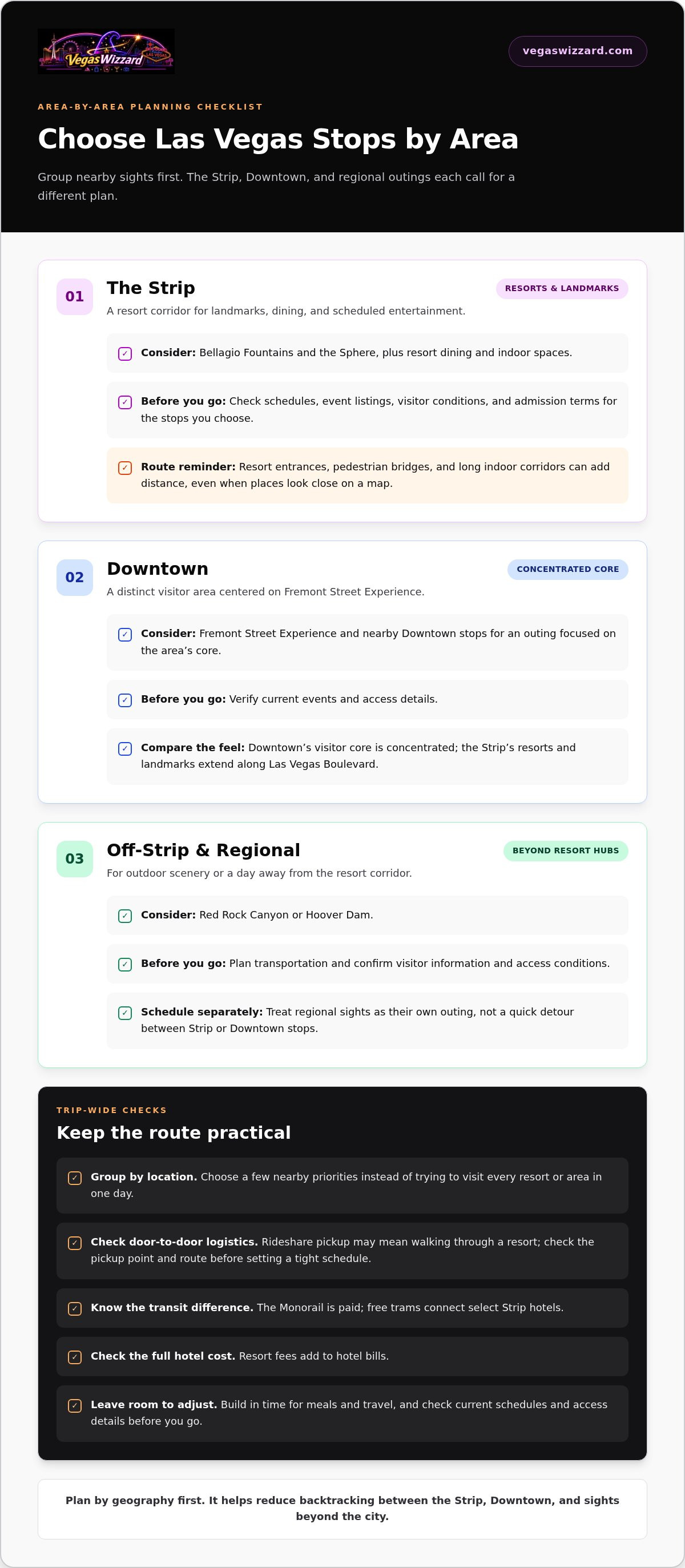
Group sights by area before choosing how many to fit into a day. The Strip is a resort corridor with major landmarks and entertainment venues; Downtown centers on Fremont Street Experience; off-Strip and regional outings take you beyond those visitor hubs. Hotel entrances, pedestrian routes, traffic, and pickup locations affect how long a trip takes, even when stops look close on a map. Check your route and current access details before setting a schedule.
Use this area-to-experience guide to narrow your choices. It’s a starting point, not a complete ranking:
| Area | Examples | Best fit and planning note |
|---|---|---|
| Strip | Bellagio Fountains, Sphere | Resort landmarks, dining, and scheduled entertainment. Check current schedules, event listings, and admission terms. |
| Downtown | Fremont Street Experience | A concentrated entertainment area for visitors who want to explore Downtown’s core. Verify current events and access details. |
| Off-Strip or regional | Red Rock Canyon, Hoover Dam | Outdoor scenery or a day away from the resort corridor. Plan transportation and confirm visitor information before you go. |
What can you see along the Las Vegas Strip?
Choose a few landmarks that match your interests rather than trying to visit every resort. The Bellagio Fountains are a recognizable outdoor stop, while the Sphere hosts scheduled entertainment. Check the official schedule and visitor conditions before building either into a timed route. Resort interiors also offer places to dine and explore indoors, which can help you adjust plans during hot weather or rain.
For more ideas to compare by interest, browse these top Las Vegas attractions. Confirm current access and admission requirements for each stop before you set out.
What is different about Downtown Las Vegas?
Fremont Street Experience gives Downtown a different feel from the Strip’s long line of resort properties. Its entertainment is concentrated around a defined core, which can suit visitors who want several Downtown stops in one outing. The Strip may work better if your plans center on resort shows, dining, or landmarks spread along Las Vegas Boulevard. Your hotel, interests, and transport plan determine which area is more convenient.
For visitor information and event context, consult the Official Las Vegas Tourism Information from the Las Vegas Convention and Visitors Authority. Before heading farther out, allow for the separate transportation involved and confirm conditions or access with the destination. Plan regional sights separately from Strip or Downtown stops instead of treating them as a quick detour.
Strip or Downtown? Compare the Las Vegas Experience That Fits You
The Strip and Downtown offer different bases, not competing versions of the same trip. The Strip centers on large resorts, headline entertainment, and a wide range of hotel choices. Downtown has a more concentrated visitor core and a distinct atmosphere. Las Vegas also has shows, museums, restaurants, and free sights, so you don’t need to build your stay around gambling.
The best base depends on your plans, mobility, and accommodation priorities. Decide where you’ll spend most of your time, then compare hotel locations with your actual schedule.
| Factor | Strip | Downtown |
|---|---|---|
| Atmosphere | Large resort properties, busy corridors, and a broad range of entertainment. | A distinct, more concentrated core with entertainment clustered around Downtown. |
| Sights and activities | Resort attractions, major shows, dining, and hotel venues spread along the corridor. | Entertainment, food, museums, and other stops within the Downtown area. |
| Getting around | Plan for distances between resorts and check transport options for each stop. | Some central plans may be closer together, but trips to the Strip still need transport. |
| Likely fit | Visitors prioritizing resort experiences, shows, and a wide choice of hotels. | Visitors whose plans center on Downtown or who prefer its different atmosphere. |
Who may prefer the Strip?
Choose the Strip if your plans revolve around resort attractions, major shows, or a concentration of large hotels. But don’t treat the Strip as one interchangeable address. Compare your hotel’s location with show venues, restaurants, and the places you expect to visit. A trip across the corridor can involve more walking and coordination than the map suggests.
Read the full room terms before booking. As of October 2026, Strip resort fees are generally reported at about $35 to $55 per night before 13.38% tax, but the charge varies by property. Verify the current fee and final total for your dates. Budget separately for meals and transportation.
Who may prefer Downtown or an off-Strip stay?
Downtown may suit visitors with several plans in its central area, while an off-Strip hotel can make sense if it better matches your lodging priorities or planned stops. Neither choice is automatically a better value. If most of your evenings or activities are on the Strip, an off-Strip stay means planning transportation for those trips.
Check the forecast before committing to outdoor plans, particularly in hot weather. The National Weather Service provides Las Vegas Climate and Weather Information to help you plan around local conditions. Then compare attractions by location and interest in this guide to top Las Vegas attractions, and shortlist the stops that fit your base and schedule.
Las Vegas Trip Planning: Check Weather, Transport, and Hidden Costs
A good Las Vegas plan accounts for more than showtimes. Weather, event schedules, hotel terms, and the distance between stops can all change how much you fit into a day. Use this checklist before booking, then review the details again close to departure.
- Set your dates and check the event calendar. Look for major conventions, games, concerts, and other events during your stay. High-demand dates can affect hotel availability, traffic, and the time it takes to reach a venue. Check event dates before locking in your hotel and activity schedule.
- Read the full hotel terms. Compare the total stay, not just the displayed room rate. Check resort fees, taxes, parking charges, cancellation terms, and other property-specific costs. A low room rate may not reflect the final bill.
- Plan transport around your actual stops. Walking through a resort and traveling between separate destinations are different tasks. Casino floors, hotel corridors, and rideshare pickup areas can add walking before a trip even begins. Check pickup locations and routes for your hotel and plans.
- Reserve activities that anchor your schedule. Book time-sensitive shows or experiences once you’ve confirmed dates and locations. Leave gaps around them for meals, transfers, and delays rather than stacking reservations across distant areas.
- Review the forecast and final costs. Check current weather close to departure, then rework outdoor plans if conditions call for it. Price meals, local rides, parking, and activities as separate budget lines.
How should you plan around Las Vegas weather and busy dates?
Summer heat can make long outdoor walks and midday sightseeing less comfortable; cooler seasons can change what you’ll want to wear and how long you’ll stay outside. Check the forecast before departure and again during your trip. The National Weather Service’s Las Vegas weather information provides local conditions. Check event calendars too, so outdoor plans and transfers don’t collide with a major venue schedule.
How do you avoid transport and budget surprises?
Start with your hotel’s location and list the stops you’ll actually visit. Compare public transit, taxis, rideshare, walking, and a rental car against that route, including parking and pickup access. Rideshare vehicles use designated resort pickup areas, not curbside hail points on Las Vegas Boulevard, so allow time to reach the correct zone. Check current provider routes, hours, and prices before choosing.
Keep costs visible. Track lodging charges, meals, parking, local travel, and attraction reservations separately instead of treating the room rate as your trip budget. For airport options, use this Las Vegas airport transportation guide to compare ways to reach your hotel. A Las Vegas budget guide can help you organize trip expenses. For activities, compare Las Vegas attractions and check current details before booking.
Plan Your Las Vegas Trip Around What You Want to Do
Make your shortlist before opening a booking page. Pick the experiences you care about, group them by location, then check timing, access, and transportation. This helps prevent a string of reservations that look appealing separately but don’t fit together in practice.
Start with a theme, not a packed schedule. You might prioritize a show, a food-focused evening, family activities, museums such as The Mob Museum, or an outdoor excursion to Red Rock Canyon. Each choice changes the practical plan: a show needs a workable route to the venue, while an outdoor outing calls for weather and transportation checks. Choose a few priorities, then compare options that fit.
How can you match activities to your travel group?
Ask each person for one priority, then look for overlap. Couples may prefer a shared show or dining plan; families should consider age suitability; groups may need extra time to coordinate meet-up points. Factor in mobility and walking distance, too. Balance indoor and outdoor stops when the forecast makes that useful, and verify accessibility details for each selected activity.
Keep the schedule realistic. Choose a small number of anchor experiences, then leave flexible time for meals, rest, and getting between places. If an activity’s location or schedule makes the day feel rushed, move it or choose another option. Plan around the people traveling, not every tempting possibility.
What should you do before booking an experience?
Compare practical details before paying. Check the location, what’s included, start time, duration, cancellation terms, age restrictions, and how you’ll reach the venue. Review current availability and the booking terms, since conditions can vary by experience. Don’t assume a ticket includes transportation or that two nearby listings share the same meeting point.
- Check the route: Compare the activity’s address with your hotel and other plans for that day.
- Read the inclusions: Confirm what the booking covers and note any separate transport or admission needs.
- Review the terms: Check the schedule, cancellation conditions, and visitor requirements before committing.
Some VegasWizzard recommendations use affiliate links. If you book through one, VegasWizzard may earn a commission. Compare the experience details and terms that matter to you before deciding. Eligible GetYourGuide experiences may accept code TRAVELWIZZARD25. Eligibility varies, so review the offer terms before booking.
Choose Your First Las Vegas Experience
Use this Las Vegas travel guide as a starting point, then choose the experience you most want to build around. A show, museum visit, family outing, or day beyond the city can give the rest of your schedule a clear purpose.
VegasWizzard sells its Las Vegas Travel Guide and offers booking for tours, day trips, helicopter flights, and shows, alongside transportation options. Some recommendations use affiliate links, which may earn the platform a commission if you book through them. Compare the details and terms that matter to your trip before deciding.
Ready to narrow your shortlist? Explore recommended Las Vegas attractions and look for eligible GetYourGuide experiences where you can apply code TRAVELWIZZARD25. Check the offer terms before booking, then choose activities that fit your interests and pace.
Frequently Asked Questions
When is the best time to visit Las Vegas?
There isn’t one best season for every visitor. Choose dates around the activities you care about: heat tolerance matters more for a daytime desert outing than for a mostly indoor schedule. Spring and fall are often favored, but check conditions for your dates rather than treating that as a weather guarantee. Winter evenings can feel cool. If your dates are flexible, compare event calendars before settling on travel days.
How many days do you need in Las Vegas?
Plan around the experiences that justify the trip, not a standard number of days. A late arrival or early departure can leave less usable sightseeing time than the calendar suggests, so treat travel days realistically. If a regional excursion is a priority, account for its separate transportation and time needs before filling the rest of your schedule. A short visit can still work if your must-dos are clear.
Can you enjoy Las Vegas without gambling?
Yes. Gambling isn’t required to enjoy Las Vegas. Visitors can focus on entertainment, food, architecture, museums, or outdoor activities instead. The Sphere, for example, hosts scheduled entertainment, while resort properties offer dining and public-facing attractions. Check each venue’s current access and event details, since a hotel’s public areas don’t automatically include admission to every show or experience. Choose activities that match your interests rather than treating casinos as the default plan.
Is it easy to get around Las Vegas without a car?
It can be, depending on your hotel and plans. A car may be unnecessary for a stay focused on one area, but several stops outside the resort corridors can call for more coordination. Consider luggage and airport transfers separately from daily sightseeing. Before choosing a rental, rideshare, taxi, or transit, compare how each option serves the places you plan to visit and the times you’ll need to travel.
Is the Las Vegas Strip walkable?
Some Strip outings work on foot, but accessibility and comfort matter as much as distance. Check whether your route involves long resort corridors, stairs, pedestrian bridges, or crossings, and look for accessible paths if anyone in your group needs them. A route that seems manageable on a map may be tiring in practice. Build in breaks and wear shoes suited to substantial walking rather than assuming a short map distance means an easy stroll.
What fees should you check before booking a Las Vegas hotel?
Compare hotel offers using the same dates, room type, and cancellation terms. Then review the final checkout breakdown for resort fees, taxes, parking, and any conditions tied to the reservation. Save the booking confirmation so you can refer to the exact terms later. Don’t compare one hotel’s headline rate with another’s total price; that can make the cheaper option look better than it is.
Are there free things to do in Las Vegas?
Yes, but distinguish free public sights from access to a resort’s facilities or entertainment. A hotel may welcome visitors into some public areas without making every attraction inside free or open to everyone. Check access conditions before planning a stop around a particular interior space or display. Free sightseeing can add variety to a paid-event trip, but confirm what’s open to visitors on your dates.
Can you use TRAVELWIZZARD25 on every Las Vegas tour?
No, don’t assume a promotion applies to every tour. Eligibility can depend on the individual experience and its current offer terms. Review the listing and the conditions shown during redemption, then make sure any applicable offer appears in the booking total before completing payment. Choose a tour based on its route, schedule, and inclusions first; treat a promotion as a possible extra, not the reason to book.
